

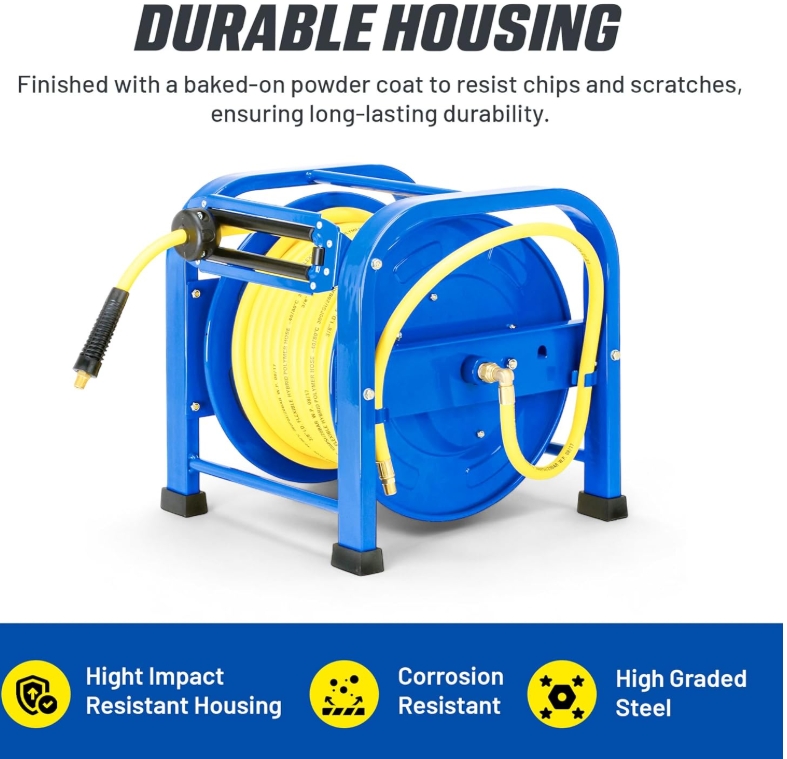
If you work with pneumatic tools, you know how tangled hoses can slow you down. An air hose reel keeps your workspace neat and helps you avoid tripping over loose hoses. You can pick a retractable air hose reel for quick cleanup, or use a portable one to move around easily. With a retractable air hose reel, you gain both safety and confidence while learning the ropes.
Key Takeaways
Air hose reels help keep your workspace neat and safe. They stop hoses from getting tangled and help prevent trips. - Pick the right reel type for your needs. You can choose manual, retractable, or portable. Think about how often and where you use it. - Choose the right hose size and material. This helps your tools get enough air and last longer. - Install your reel with care. Use the right tools and follow safety steps to stay safe. - Check and take care of your air hose reel often. This helps it work well and last longer.
Air Hose Reel Overview
What Is an Air Hose Reel
You might wonder what an air hose reel actually does. An air hose reel is a tool that stores and organizes hoses used to deliver compressed air. You use it to keep your hose neat, tangle-free, and ready for action. The reel has a sturdy core that holds the hose in place, so it doesn’t unravel or get in your way. Some reels use a spring or manual crank to help you pull out or retract the hose. Others have latching systems that let you lock the hose at any length you need.
Over the years, air hose reels have changed a lot. Early models just kept hoses off the floor. Now, you’ll find features like slow retract mechanisms, adjustable stoppers, and even high-visibility hoses. These upgrades make your workspace safer and more efficient. Modern reels also use tough, corrosion-resistant materials, so they last longer and meet today’s safety standards.
Tip: Always check that your air hose reel matches your compressed air system. This helps you get the best performance and keeps your tools running smoothly.
Key Benefits
Why should you use an air hose reel? Here are some reasons:
Safety: You avoid tripping over loose hoses. The reel keeps your workspace clear and organized.
Efficiency: You save time. You can pull out just the length you need and retract it quickly when you’re done.
Hose Protection: The reel prevents kinks and bends, which means your hose lasts longer.
Versatility: You can use air hose reels in many places—workshops, garages, farms, and even at home.
Market Growth: More people are using air hose reels every year. The global hose reels market is worth about $874 million in 2024 and is expected to keep growing. Both professionals and DIY users rely on these tools for their projects.
With all these benefits, it’s easy to see why air hose reels have become so popular in both professional and home settings. You get a safer, cleaner, and more productive workspace.
Types of Air Hose Reels
Manual Air Hose Reel
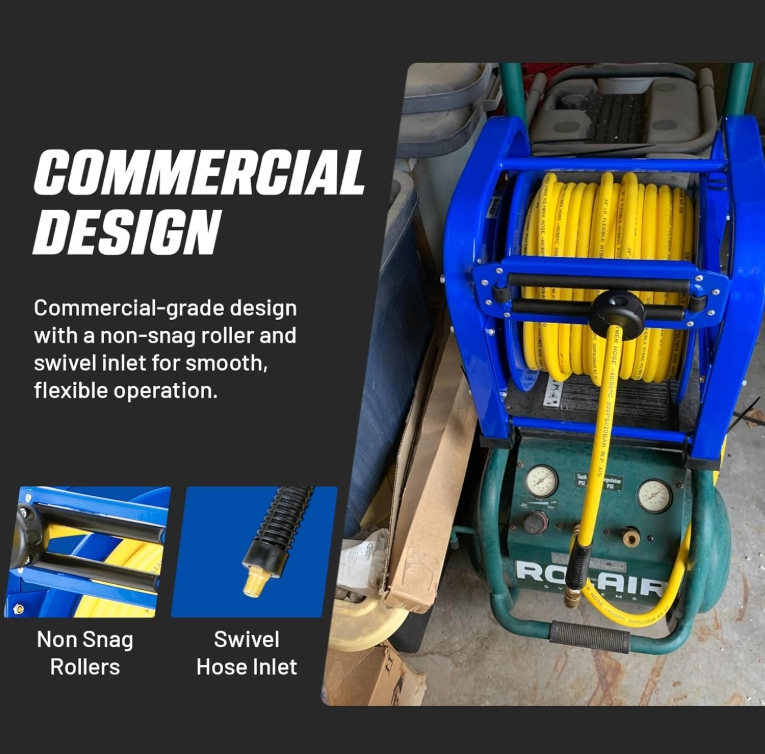
A manual reel gives you full control. You pull out the hose by hand and wind it back up using a handle or crank. This type works well if you need to move your hose around or use it in different spots. You don’t need power or fancy mechanisms—just your own effort.
You can carry a manual reel to different work areas. This makes it great for jobs that move around the shop or garage.
Manual reels are simple. Fewer moving parts mean less can go wrong.
You get to decide how much hose you need. Just pull out what you want and wind it back when you’re done.
Tip: Always check the hose diameter and length. These affect how much air flows to your tools and how safe your setup is.
Manual reels use strong materials that stand up to tough jobs. They help keep hoses off the floor, which means fewer trips and falls. You also protect your hose from kinks and sharp bends, so it lasts longer.
Retractable Air Hose Reel
A retractable air hose reel makes your life easier. You pull out the hose, and when you’re done, the reel pulls it back in for you. No more winding by hand! This type uses a spring-loaded system that does the hard work.
You save time. The retractable air hose reel rewinds the hose quickly and neatly.
You boost safety. Many retractable air hose reels have slow-return features. This stops the hose from whipping back and causing injuries.
You keep your workspace tidy. The hose always goes back in place, so you don’t trip or step on it.
Retractable air hose reels use tough materials like metal alloys or strong plastics. These stand up to harsh shop conditions, including heat, cold, and even chemical splashes. You can mount a retractable air hose reel on a wall or ceiling, which keeps your floor clear and your hose ready to use.
The right hose size and material matter. Rubber, PVC, or polyurethane hoses each have their own strengths. Some are more flexible, while others resist abrasion or handle high temperatures better.
Make sure the fittings match your hose. This stops leaks and keeps your air pressure steady, which helps your tools work safely and efficiently.
If you use your air tools a lot, a retractable air hose reel saves you effort every day. You just pull, use, and let the reel do the rest.
Portable Air Hose Reel
A portable air hose reel gives you the freedom to work anywhere. You can move it around your shop, garage, or even outside. This type comes in both manual reel and retractable air hose reel versions, so you get to choose what works best for you.
You get mobility. Take your hose wherever you need it—no more dragging long hoses across the floor.
You stay organized. Portable air hose reels keep hoses neat, even when you’re on the move.
You improve safety. No loose hoses lying around means fewer accidents.
Portable air hose reels combine the best features of both manual reel and retractable air hose reel designs. You can pick a manual reel for simple jobs or a retractable air hose reel for quick, automatic cleanup. Both types help you avoid kinks and damage, which means your hose lasts longer and your tools work better.
Note: Always match your hose and reel to your job. Think about hose length, diameter, and the kind of air tools you use. The right setup keeps your work safe and efficient.
Here’s a quick look at how these types compare:
Type |
Best For |
Key Benefits |
Mobility |
|---|---|---|---|
Manual Reel |
Occasional, mobile use |
Simple, portable, easy to maintain |
High |
Retractable Air Hose Reel |
Frequent use, fixed spots |
Fast, safe, automatic retraction |
Medium |
Portable Air Hose Reel |
Moving between jobs |
Flexible, organized, safe |
Highest |
When you choose an air hose reel, think about how often you use your tools, where you work, and how much hose you need. Portable and retractable air hose reels help you stay safe, work faster, and keep your shop looking sharp. 🚀
Choosing the Right Air Hose Reel
Assessing Your Needs
Before you pick an air hose reel, you need to think about how you plan to use it. Start by asking yourself a few questions:
How often do you use your air tools?
Do you work in one spot, or do you move around a lot?
What kind of jobs do you do most—quick fixes or long projects?
How much space do you have for storage?
If you use your air compressor every day, you might want a retractable reel for fast cleanup. If you move between work areas, a portable reel makes more sense. Some people need a reel that can handle heavy-duty jobs, while others just want something simple for light tasks.
Tip: Make a list of your most-used tools and where you use them. This helps you choose a reel that fits your routine.
Important Features
When you shop for an air hose reel, look for features that make your work easier and safer. Here are some things to check:
Mounting Options: Wall, ceiling, or portable? Pick what works best for your space.
Reel Type: Manual or retractable? Manual reels give you control, while retractable reels save time.
Locking Mechanism: Some reels let you lock the hose at any length. This keeps the hose steady while you work.
Hose Guide: A good guide helps the hose wind up smoothly and prevents tangles.
Build Quality: Look for strong materials like metal or heavy-duty plastic. These last longer and stand up to tough jobs.
Safety Features: Slow-return systems and protective covers help prevent accidents.
You can also choose reels with special features, like constant tension or locking reels. We can help you find the right mix of features for your job.
Note: Always check if the reel matches your air compressor and tools. This keeps your system running smoothly.
Hose Size and Material
Hose size and material play a big role in how well your tools work. The diameter and length of your hose affect how much air gets to your tools. If you use a hose that is too long or too narrow, you lose air pressure. This means your tools might not work as well, and your air compressor has to work harder.
Empirical data shows that hose diameter and length can change how much pressure you get at the end of the hose. For example, a 100-foot hose with a 1-inch diameter loses only about 3.35 psi at 100 CFM and 90 psi. But if you use a 1/2-inch hose of the same length, you could lose up to 44 psi. That’s a big difference! Longer hoses and smaller diameters make your compressor work more and can slow down your tools.
Fittings matter, too. Quick-connect fittings sometimes have smaller openings that can restrict airflow. If you use the wrong size, you might notice your tools losing power.
Here’s a quick table to help you see how hose size affects performance:
Hose Diameter |
Hose Length |
Pressure Drop (at 100 psi) |
Tool Performance |
|---|---|---|---|
1 inch |
100 ft |
3.35 psi |
High |
1/2 inch |
100 ft |
44 psi |
Low |
1 inch |
300 ft |
10.1 psi |
Medium |
When you choose a hose, think about what your tools need. Heavy-duty tools need more air, so pick a bigger hose. For light jobs, a smaller hose might be fine. You can also choose from different materials like rubber, PVC, or polyurethane. Rubber hoses are flexible and last a long time. PVC hoses are lightweight and easy to carry. Polyurethane hoses resist kinks and work well in cold weather.
Callout: The right hose size and material help your air compressor work better and keep your tools running strong.
Installation and Setup
Tools Needed
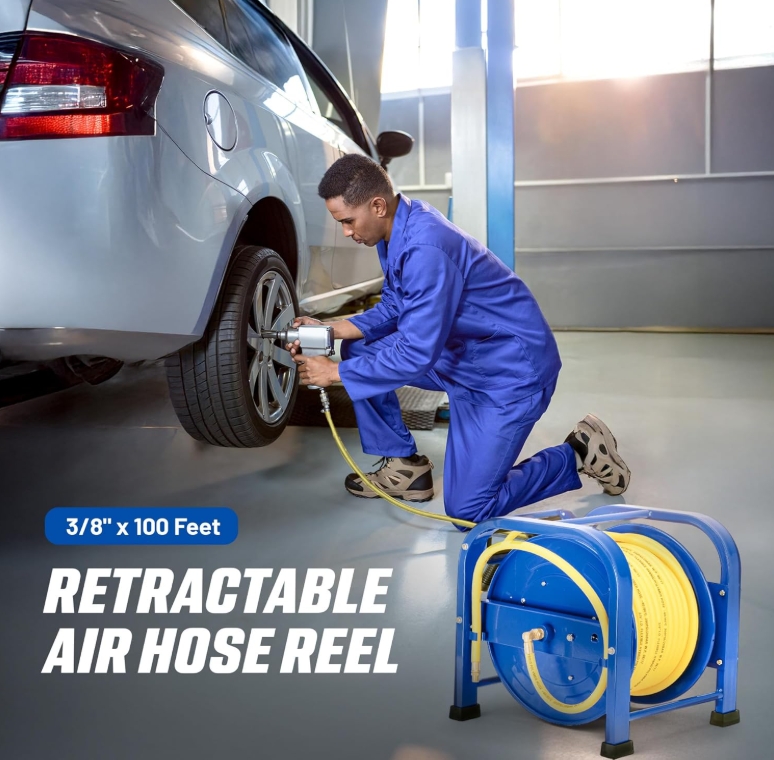
Before you start, gather a few basic tools. You do not need anything fancy. Here’s a quick checklist:
Adjustable wrench
Drill with bits (if you plan to mount the reel)
Mounting hardware (screws, anchors, or bolts)
Tape measure
Pencil or marker
Safety glasses
Tip: Always check the instructions that come with your reel. Some models may need special tools or extra parts.
Step-by-Step Guide
Ready to set up your air hose reel? Follow these steps:
Pick a Spot: Choose a place close to your air compressor. Make sure you have enough room to pull out the hose.
Mark the Holes: Hold the reel where you want it. Use a pencil to mark the mounting holes.
Drill the Holes: Put on your safety glasses. Drill holes for the mounting hardware.
Attach the Reel: Line up the reel with the holes. Use screws or bolts to secure it.
Connect the Hose: Attach the hose to your air compressor. Make sure the fittings are tight.
Test the Reel: Pull out the hose and let it retract. Check for smooth movement.
Note: If you use a portable reel, you can skip the mounting steps. Just connect the hose and you’re good to go!
Safety Tips
Stay safe while setting up your reel. Here are some quick reminders:
Wear safety glasses when drilling.
Double-check all connections before turning on the air compressor.
Keep the hose away from sharp edges.
Do not pull the hose too hard. Let the reel do the work.
Store the hose neatly after each use.
🚦 Safety first! A tidy setup helps prevent trips and keeps your tools in top shape.
Maintenance and Troubleshooting
Routine Care
Taking care of your air hose reel keeps it working smoothly. You do not need special skills for this. Just follow a few easy steps:
Wipe down the reel and hose with a clean cloth after each use. This removes dust and grime.
Check the hose for twists or kinks before you store it.
Lubricate moving parts, like the crank or spring, every few months. Use a light machine oil.
Store your reel in a dry place. Moisture can cause rust or damage to the hose.
Tip: Set a reminder on your phone to do a quick check every month. Regular care saves you time and money later.
Checking for Damage
You want your air hose reel to last. Look for signs of wear before each use. Here’s what you should check:
Inspect the hose for cracks, splits, or bulges.
Look at the fittings. Make sure they are tight and not leaking.
Check the reel’s frame for rust or bent parts.
Test the retraction system. The hose should pull out and retract smoothly.
If you spot any problems, fix them right away. Small issues can turn into big ones if you ignore them.
🚨 Alert: Never use a hose with visible damage. Replace it to keep your workspace safe.
Quick Fixes
Sometimes things go wrong. Don’t worry—you can handle most problems yourself. Here are some quick fixes:
Problem |
What You Can Do |
|---|---|
Hose won’t retract |
Check for tangles. Lubricate the spring. |
Air leaks at fittings |
Tighten or replace the fitting. |
Hose kinks or twists |
Straighten the hose. Store it properly. |
Reel feels stiff |
Add a drop of oil to moving parts. |
If you try these steps and the problem stays, check your user manual or contact customer support. Keeping your air hose reel in top shape means safer, faster work every day!
You’ve learned how to pick, set up, and care for your retractable air hose reel. When you choose the right reel and install it safely, you keep your workspace tidy and avoid accidents. Using a retractable air hose reel means you spend less time on cleanup and more time getting things done. Over the years, you’ll notice fewer hose repairs, less clutter, and a safer shop. Quality reels like these help you work smarter and save money in the long run.
FAQ
How do I know which air hose reel is right for me?
Think about how often you use your air tools and where you work. If you move around a lot, a portable reel works best. For quick cleanup, try a retractable reel.
Can I use my air hose reel outdoors?
Yes, you can! Just make sure you pick a reel made from weather-resistant materials. Portable air hose reels handle outdoor jobs well. Store your reel inside when you finish to keep it in top shape.
What should I do if my hose won’t retract?
First, check for tangles or kinks. If the hose still won’t retract, add a drop of oil to the moving parts. Sometimes, a quick clean helps. If you need more help, check your user manual or contact customer support.
How often should I check my air hose reel for damage?
You should inspect your reel before each use. Look for cracks, leaks, or worn parts. Regular checks help you catch problems early and keep your workspace safe.
Tip: Set a reminder on your phone to check your reel every month. This simple habit can save you time and money!
