
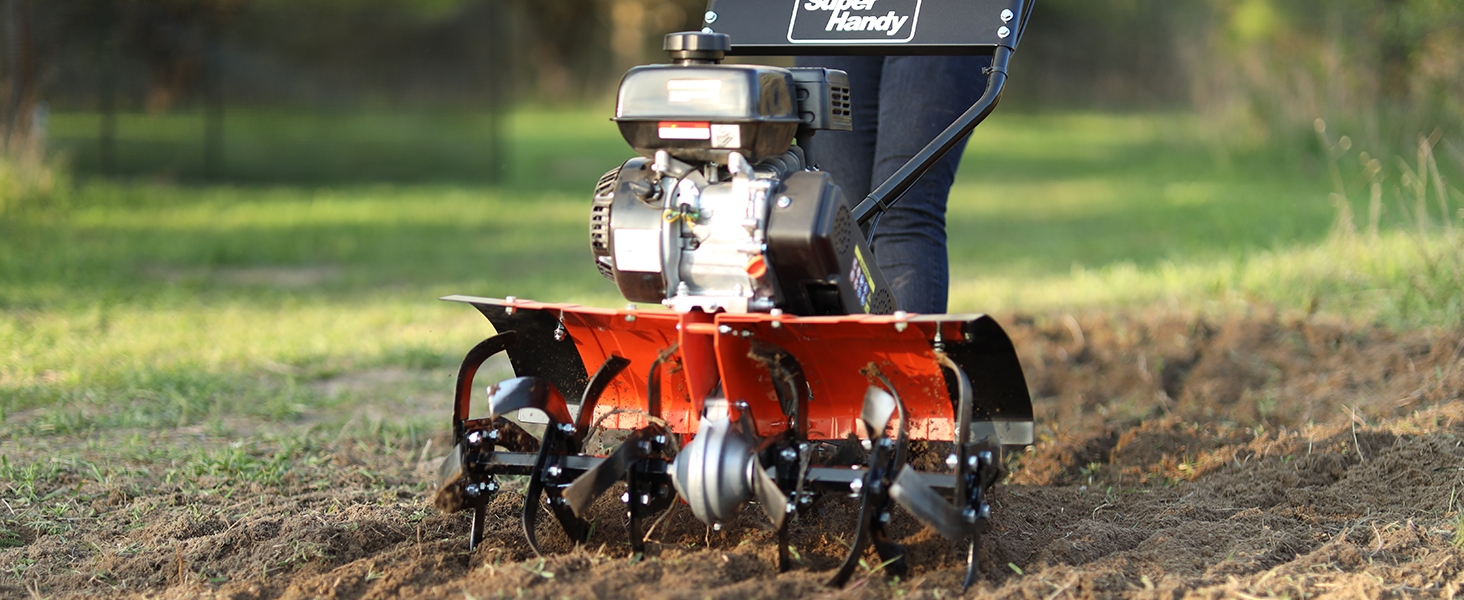
Discover What a Rototiller Does and How SuperHandy Makes It Easy
When getting soil ready for planting, a rototiller helps a lot. It has spinning blades that loosen hard soil and add air. This makes the soil better for seeds or plants. Unlike shovels, rototillers do the tough work for you. They save your energy and time. The SuperHandy RotoTiller is strong and dependable. It’s a smart pick for both gardeners and landscapers.
Key Takeaways
-
A rototiller helps you save time by breaking tough soil fast.
-
It makes the soil airy, so water and nutrients spread better.
-
Rototillers make flat planting beds, helping plants get sunlight evenly.
-
Pick the right rototiller: front-tine for small spaces, rear-tine for big areas.
-
SuperHandy rototillers are strong and have great features for gardening.
What Is a Rototiller?
Definition and purpose
A rototiller is a strong tool that makes gardening easier. Instead of using hand tools like shovels, you can use a rototiller. It has spinning blades powered by gas or electricity. These blades break up soil, making it loose and airy. This helps seeds grow better and plants thrive.
Rototillers also mix compost or fertilizer into the soil evenly. They can destroy pest larvae hiding in the dirt, stopping future problems. Whether starting a garden or caring for one, a rototiller makes soil work simple.
Tip: A rototiller saves time and helps good soil organisms grow. These organisms are important for healthy plants.
Key features and components
Modern rototillers have useful features and strong parts for better performance. The spinning blades, called tines, are the main part of the machine. These tines cut through hard soil, grass, weeds, and small roots. Different models have front-tine, mid-tine, or rear-tine setups for various tasks.
The motor, powered by gas or electricity, moves the tines to break soil. New designs use tough materials that last longer and need less fixing. For example, special designs make soil-touching parts stronger and more durable.
Other features include adjustable depth, comfy handles, and compact sizes for easy use. These parts make rototillers a must-have for gardeners and landscapers.
Note: High-tech rototillers, like SuperHandy ones, use advanced designs to work better and last longer.
What Are Rototillers Used For?
Soil preparation for planting
A rototiller makes getting soil ready for planting simple. It breaks up hard soil, making it loose and airy for roots. This helps water and nutrients reach plant roots better. You can also use it to clear grass and weeds. This creates a clean area for planting seeds or young plants. The tilling process makes the soil surface even, which is great for planting.
Tip: Start using a rototiller early in the season. This allows the soil to settle before planting time.
Landscaping and garden creation
Rototillers are handy tools for landscaping and building gardens. They help flatten bumpy ground for lawns, flower beds, or veggie gardens. Whether your space is small or large, a rototiller can do the job. It clears old grass and mixes the soil, giving you a fresh start.
-
Main uses in landscaping:
-
Clearing grass and weeds
-
Flattening soil for planting
-
Prepping spots for paths or patios
-
Rototillers save time and energy, especially on big projects.
Incorporating organic matter and fertilizers
Adding compost or fertilizer makes soil healthier for plants. A rototiller mixes these materials evenly into the soil. This spreads nutrients better and improves soil quality. You can mix in compost, manure, or other organic stuff to enrich the soil.
Note: Using a rototiller often helps good microorganisms grow in the soil. These tiny organisms are key to healthy plants.
Rototillers make this job faster and easier than doing it by hand.
How Does a Rototiller Work?

How tines and motor work together
A rototiller uses its motor and tines to prepare soil. The motor, powered by gas or electricity, makes the tines spin fast. These tines are sharp, curved blades that dig into the ground. They break up hard soil, cut weeds, and mix the dirt.
The motor keeps the tines moving steadily as you work. You can change the speed and depth based on your soil type. For example, when using a rototiller on grass, set the depth to remove grass without harming the soil below.
Tip: Check the motor and tines before starting. A well-cared-for rototiller works better and lasts longer.
How it loosens and adds air to soil
When you use a rototiller, the tines dig and turn the soil. This breaks up clumps and creates tiny air spaces in the dirt. These spaces let oxygen reach plant roots, helping them grow. Aerated soil also soaks up water and nutrients better, making plants healthier.
If you're using a rototiller on grass, it removes the grass layer and loosens the soil underneath. This gives you a clean, airy surface for planting. The rototiller ensures the soil is even, helping seeds sprout and roots spread easily.
Note: Regularly aerating soil with a rototiller improves its health and structure over time.
Front-tine vs. rear-tine models
There are two main types of rototillers: front-tine and rear-tine. Each type works best for specific tasks.
-
Front-tine rototillers: These are light and easy to handle. The tines are at the front, making them great for small gardens or tight areas. They are good for light jobs like preparing flower beds or mixing compost.
-
Rear-tine rototillers: These are bigger and stronger. The tines are at the back, and the wheels are in front. They are perfect for tough jobs like breaking hard soil or working on large spaces. Landscapers often choose rear-tine models for big projects.
Pick the right model for your needs. For small gardens, a front-tine rototiller is a good choice. For larger areas or harder soil, a rear-tine model works better.
Tip: SuperHandy offers multiple rototillers. Choose one that fits your gardening tasks.
Benefits of Using a Rototiller

Saves time and effort
A rototiller makes soil work faster and easier. Instead of digging by hand, let the machine do it. The motorized tines quickly break up hard soil. This saves you from tiring, backbreaking work. You’ll have more time for planting or planning your garden.
Tip: For big areas, a rototiller is much faster than shovels.
Improves soil aeration and fertility
When using a rototiller, it creates tiny air spaces in the soil. These spaces help oxygen reach plant roots, which helps them grow. Aerated soil also soaks up water and nutrients better.
A rototiller also mixes compost and fertilizer into the soil. This spreads nutrients evenly, making the soil healthier. Over time, this improves the soil’s structure and quality.
Note: Using a rototiller often helps good microorganisms grow. These tiny helpers improve soil health.
Makes planting beds even
A rototiller creates smooth, level planting beds. It breaks up soil clumps and flattens the surface. This makes planting seeds or seedlings much easier.
Even planting beds help plants grow evenly. They get equal sunlight, water, and nutrients. Whether for veggies or flowers, a rototiller gives great results.
Tip: Adjust the depth of your rototiller to fit your plants’ needs.
Types of Rototillers
Front-tine rototillers: Best for small gardens
Front-tine rototillers work well in small gardens or tight spots. Their tines are at the front, making them light and easy to move. Use them for flower beds, veggie patches, or small areas. They are simple to handle around trees or garden edges.
These machines are great for light jobs like mixing compost or loosening soil. They perform best in soft or already tilled soil. If you’re new to gardening or have a small yard, a front-tine rototiller is a smart and easy option.
Tip: Front-tine rototillers are perfect for quick soil fixes in small spaces.
Rear-tine rototillers: Ideal for larger areas
Rear-tine rototillers are strong and built for big jobs. Their tines are at the back, and large wheels in front give them stability. They dig deep into the soil, which is helpful for tough or new ground.
You can pick models with forward-rotating or counter-rotating tines. Forward tines are good for light tasks, while counter tines cut through hard soil. Rear-tine rototillers are great for starting new gardens, leveling big areas, or prepping soil for crops. They are powerful and save time, making them popular with landscapers and serious gardeners.
Note: Rear-tine rototillers are perfect for large, tough soil projects.
Why SuperHandy rototillers are a top choice

SuperHandy makes some of the best rototillers for all needs. Their tools are easy to use and have advanced features to help with gardening.
These rototillers are made with strong materials for long-lasting use. They have adjustable depth settings, comfy handles, and compact designs for easy handling. SuperHandy focuses on quality and innovation, so their tillers give great results for any project size.
Tip: Pick a SuperHandy rototiller for reliable and easy gardening work.
A rototiller is a helpful tool for getting soil ready fast. It saves time, makes soil better, and creates smooth planting areas. Knowing how it works and its benefits helps you pick the right one. SuperHandy makes dependable rototillers that simplify gardening. Their tools are great for beginners and experts alike, giving better results with less work.
Tip: Pick a rototiller that fits your garden’s size and needs.
FAQ
How do you use a rototiller for the first time?
Start by reading the manual to understand the controls. Clear the area of rocks and debris. Adjust the depth setting based on your soil type. Slowly guide the rototiller forward, letting the tines break up the soil. Avoid forcing the machine; let it do the work.
Tip: Practice on a small patch to get comfortable with how to use a rototiller.
Can you use a rototiller on wet soil?
Avoid using a rototiller on wet soil. Wet soil clumps together, making it harder to till and damaging the soil structure. Wait until the soil is slightly dry but still moist enough to crumble easily when you squeeze it in your hand.
What maintenance does a rototiller need?
Clean the tines after each use to prevent rust. Check the motor, oil levels, and air filter regularly. Tighten any loose bolts and inspect the blades for wear. Proper maintenance ensures your rototiller works efficiently and lasts longer.
How deep should you till the soil?
For most gardens, till the soil 6-8 inches deep. This depth allows roots to grow easily and improves water and nutrient absorption. Adjust the depth setting on your rototiller based on the type of plants you plan to grow.
Can a rototiller remove grass?
Yes, a rototiller can remove grass effectively. Set the depth to cut through the grass layer and loosen the soil underneath. After tilling, rake away the grass clumps to prepare the area for planting. This method saves time compared to manual removal.
Leave a comment